

What is the Real Difference Between 3D, 4D, and 5D Plates in 2026?
-
Posted by
addpeople
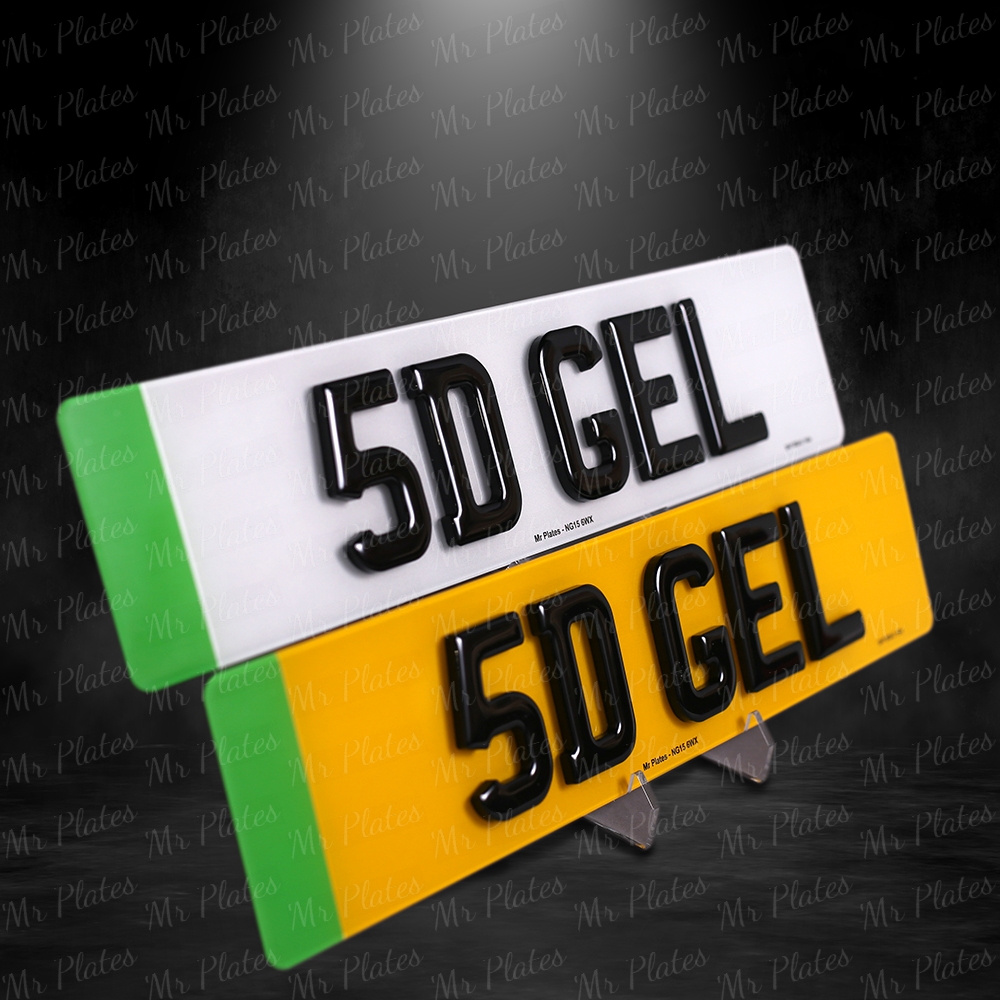
Car customisation goes beyond paint and wheels; number plates are now a very popular way to give your vehicle a subtle or bold upgrade. But what do terms like 3D, 4D, or 5D plates currently mean, and how do they differ?
In the last five years alone, the DVLA has issued more than 2.6 million private registrations, highlighting the growing popularity of personalised and premium number plates. While official data doesn’t break down sales by plate style, this rising demand has boosted interest in distinctive designs such as 3D, 4D, and 5D plates.
Let’s take a look at the real difference between 3D, 4D, and 5D plates available in 2026.
Why Do You Need A Number Plate?
A number plate is not just a vehicle accessory; it’s a legal requirement and a vital form of identification. Every number plate is unique and links your vehicle to official records held by the DVLA. This allows authorities to identify vehicles for taxation, insurance, MOT records, road safety enforcement, and crime prevention.
Without a correctly displayed number plate, a vehicle cannot legally be driven on UK roads. Number plates also play a key role in systems such as ANPR (Automatic Number Plate Recognition), which is used by police, toll roads, car parks, and high traffic areas. In short, your number plate ensures your vehicle is recognisable, traceable, and compliant with UK road laws.
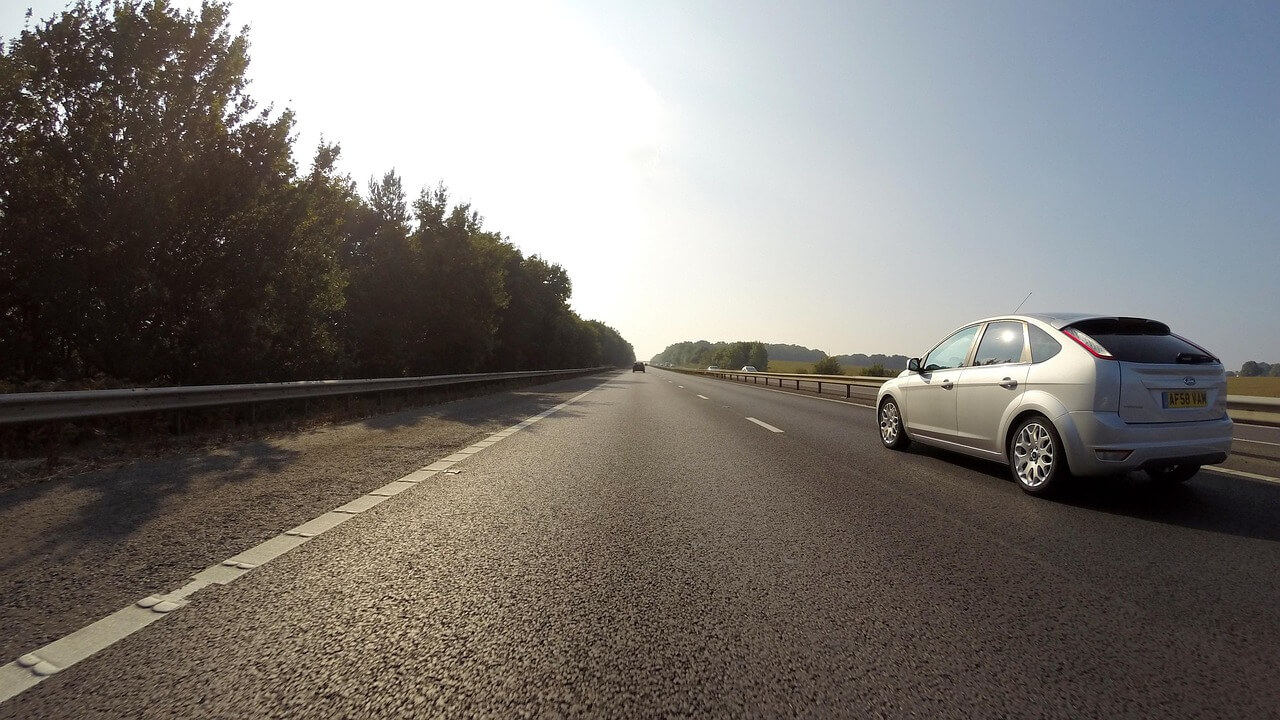
What Makes a Number Plate Legal?
In the UK, number plates must meet strict legal requirements set out by the DVLA and the British Standard (BS AU 145e). The number plate legal requirements are designed to ensure plates are clearly readable in all road and weather conditions and cannot be altered to mislead a vehicle’s registration.
Legal number plates must:
- Display the correct legal number plate spacing, font and character size.
- Use black characters on a white background (front) and black characters on a yellow background (rear).
- Meet the BS AU 145e standard for material, reflectivity, and durability.
- Include the British Standard mark.
- Show the name and postcode of the registered plate supplier.
- Accurately match the vehicle’s registered details.
If your car does not meet these number plate legal requirements, this can lead to fines (up to £1,000), MOT failures, or being pulled over.
As these regulations are very specific, choosing a reputable number plate provider is essential. Trusted suppliers understand DVLA compliance and ensure plates are manufactured to the correct standards. Using an unapproved or low-quality provider could result in an illegal plate, which may lead to MOT failure, fines, penalty points, or even having your vehicle taken off the road.
Different Number Plate Styles Explained
2D Plates Explained
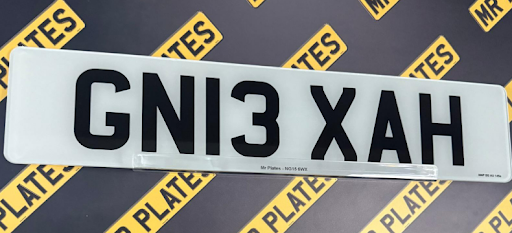
2D number plates are the standard, flat plates fitted to most vehicles on UK roads. Unlike 3D, 4D, or 5D plates, the characters on a 2D plate are printed directly onto the reflective background rather than being raised or layered. This straightforward, traditional design is widely recognised and remains the most common choice for everyday vehicles.
Because of their straightforward construction, 2D plates are fully compliant with DVLA regulations when manufactured correctly.
3D Number Plates Explained
3D plates use raised characters coated in gel resin, giving them a rounded, glossy finish that catches light and adds depth to the registration number. The effect is subtle, but noticeable and eye-catching compared with a flat plate.
Are 3D Number Plates Legal?
3D number plates offer a premium look, with smooth curves and a high-gloss finish that enhances the overall appearance of a vehicle. However, they do come at a slightly higher cost than standard plates and may require careful installation to ensure they remain road-legal.
As with all number plate styles, they must still comply with the DVLA’s strict rules on font, spacing, and reflectivity to meet legal requirements set out by GOV.UK.
4D Number Plates Explained
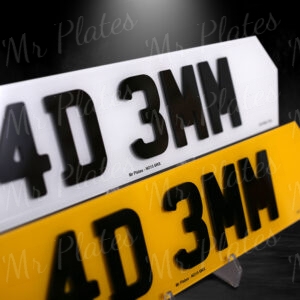
4D plates take the next step by using laser-cut acrylic characters that produce sharper, cleaner edges and a defined dimensional look. This style is popular among car enthusiasts who want their registration to have a more standout presence.
4D plates create a strong visual impact with their distinctive characteristics. They can, however, be slightly more expensive than 3D plates.
Are 4D Number Plates Legal?
Yes, they are! Road-legal 4D plates must use the official UK number plate font, maintain correct spacing between characters, and feature solid black lettering on a compliant reflective background. Decorative outlines, coloured edging, shadows, or altered spacing are not permitted, as they can affect readability and character recognition.
When manufactured and supplied by a reputable, DVLA-registered provider such as Mr Plates, 4D number plates can be both eye-catching and fully legal for use on UK roads.
5D Gel Plates Explained
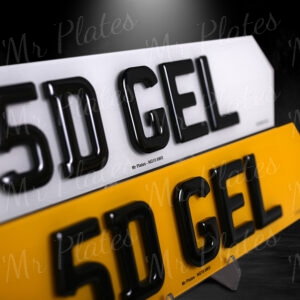
5D plates combine the crisp, raised acrylic characters of 4D styles with additional visual layers, such as a gel overlay or decorative finish, that add multi-layered depth and sheen. 5D number plates offer the maximum visual dimension and can significantly enhance the appearance of your car.
However, 5D plates can be the most expensive of the four options, and again, they must be carefully manufactured to remain within DVLA specs.
Are 5D Number Plates Legal?
This type of number plate is completely legal; however, like the rest of the guidance, it must comply with the above legal requirements. If a 5D plate meets these criteria, the raised, layered effect is purely cosmetic and does not affect legality. Plates that alter spacing, font style, or visibility, however, are illegal and may result in fines, MOT failure, or penalties.
Which Number Plate is Best For You in 2026?
Choosing the right number plate comes down to how much visual impact you are looking for while staying road legal. From understated enhancements to bold, eye-catching designs, modern number plates offer different levels of depth and style. When manufactured to DVLA standards, 3D, 4D, and 5D plates can all be compliant, so the best option ultimately depends on your personal style preferences and budget.
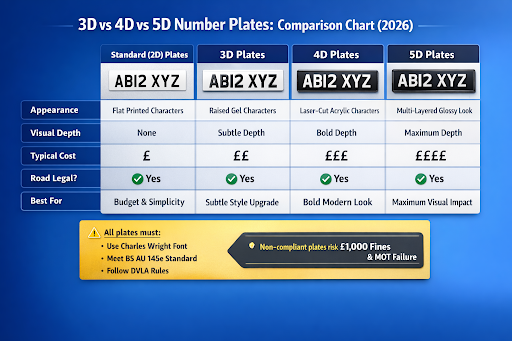
- 2D: Standard, budget-friendly option.
- 3D: Subtle style with a premium edge.
- 4D: Bold and modern look with deep, sharp characters.
- 5D: Maximum dimensional effect and visual flair.
All can be compliant when produced correctly; the best choice depends on your style preferences and budget. Our chart below explains the difference between 3D 4D and 5D plates, making it easier for you to decide on the best option.
Choose From A Range of High-Quality Road Legal Number Plate Styles From Mr Plates
Whether you prefer a clean, classic look or a more modern finish, choosing legal number plate styles is essential for staying compliant and avoiding unnecessary fines or MOT issues. That’s why it’s always important to buy from a DVLA-registered number plate supplier and ensure your plates display the BS AU 145e mark along with the correct supplier details.
At Mr Plates, you can order DVLA-approved number plates online easily and confidently. Every plate is manufactured to UK road regulations, combining quality materials with precise detailing for a professional finish. If you’re looking for DVLA-approved number plates UK-wide, Mr Plates offers a reliable, compliant solution with a wide choice of styles to suit every vehicle.
Choose Mr Plates for road-legal quality, trusted compliance, and standout style, without the compromise.
