

How to Identify Illegal 4D Plates: A Buyer’s Checklist
-
Posted by
addpeople
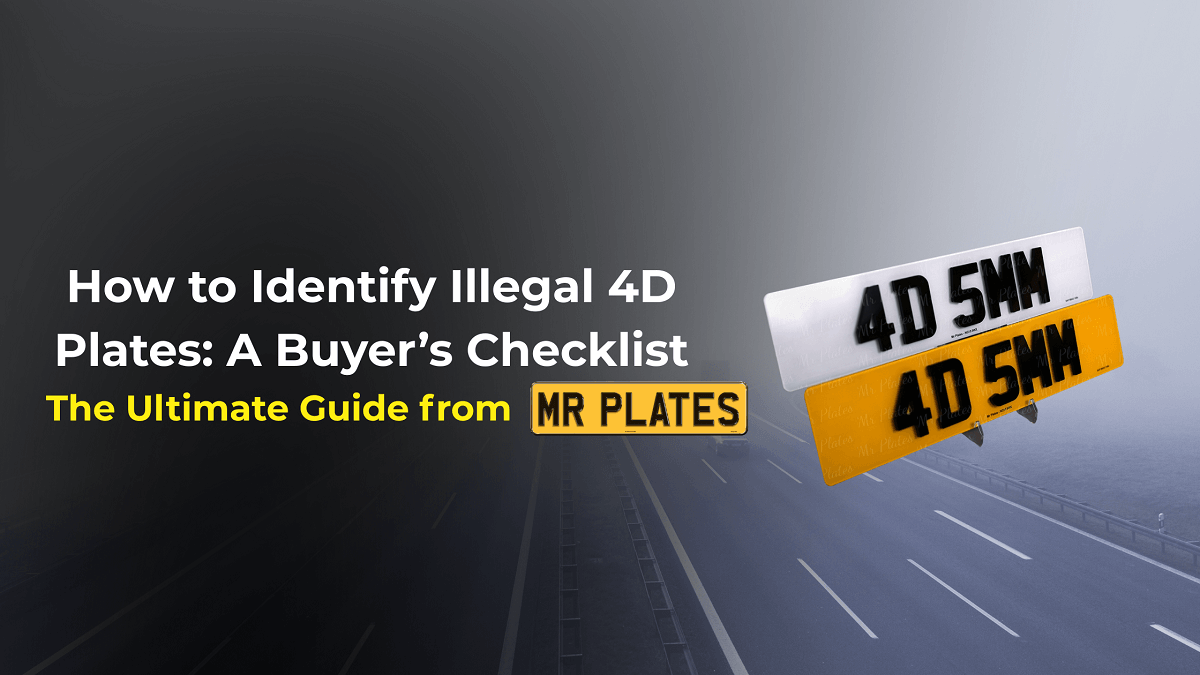
Illegal 4D plates are often sold as ‘road legal’ when they are not. In practice, we regularly see drivers caught out by plates that look compliant at first glance but fail basic checks during an MOT, roadside stop, or insurance inspection.
The key is knowing how to identify illegal plates before you buy. Use our simple checklist to identify the clear warning signs, so you can spot issues quickly and avoid unnecessary risk.
How to Identify Illegal Plates Before You Buy
Knowing how to identify illegal plates comes down to understanding how compliant plates are made under DVLA rules. Most non-compliant 4D plates fail in the same few ways. From incorrectly spaced characters to missing British Standard numbers, these issues are rarely accidental. They are usually the result of shortcuts taken during manufacturing or sellers mislabelling show plates as road legal.
When buying 4D plates online or in person, it is important to check more than just the overall appearance. Plates that look ‘almost right’ are often the ones that cause problems later. The checklist below shows you exactly what to look for before you buy.
Legal 4D Number Plate Checklist: Quick Identification Guide
Use this legal 4D number plate checklist to identify illegal plates at a glance. A road-legal 4D number plate must meet every requirement below.
Legal 4D Number Plate Checklist
- Uses the Charles Wright font only
- Has correct character spacing with no compressed or altered layout
- Features solid black characters with no tint, colour, or frosted effect
- Has a plain reflective background (white on the front, yellow on the rear)
- Displays the BS AU 145e British Standard mark
- Shows the supplier name and postcode on the plate
- Raised characters are non-reflective
- Characters are securely bonded with no lifting or peeling
If a plate fails any one of these checks, it is illegal for road use.
Common Signs You’re Looking at an Illegal 4D Plate
Illegal 4D plates and other illegal number plates often share the same warning signs. Knowing these makes it much easier to spot problems before purchase.
Incorrect Spacing or Altered Layouts
Characters that are squeezed together, unevenly spaced, or arranged to spell words are not compliant. Legal spacing is fixed and cannot be adjusted for styling.
Tinted, Frosted, or Coloured Acrylic
Any colour layer, smoked effect, or frosted finish beneath the characters makes a plate illegal, even if described as subtle or barely visible.
Poor Quality Materials or Adhesives
Low-quality plates often show bubbles, uneven edges, or letters that begin to lift. These are strong signs the plate has not been manufactured to legal standards.
Why Illegal 4D Plates Often Look ‘Almost Right’
Many illegal 4D plates begin life as show plates and are then mis-sold for road use. They are designed to look similar to legal plates but cut corners on materials, spacing, or compliance checks.
Because these differences can be subtle, buyers often assume a plate is legal based on appearance alone, increasing the risk of cloned number plates. In many cases, the differences only become obvious when you compare an illegal plate side-by-side with a fully compliant one.
This is why understanding how to identify illegal plates before buying is so important, particularly when prices seem unusually low.
How Approved Suppliers Reduce the Risk
Approved suppliers manufacture plates to strict specifications as standard. This includes correct fonts and spacing, compliant materials, secure adhesives, and all required markings.
Buying from an approved supplier removes the guesswork and helps ensure your plates are suitable for road use from the outset.
Identify Illegal 4D Plates with Confidence
Identifying illegal 4D plates does not need to be complicated. By using the checklist above and understanding the most common warning signs, you can quickly assess whether a plate is suitable for road use.
If something looks slightly off, it usually is. A legal plate should pass every check easily. Taking a few moments to identify illegal plates before you buy can help protect road safety and avoid unnecessary stress later.
Choosing a supplier that understands plate regulations removes unnecessary risk and guesswork from the process.
About the author
Written by the Mr-Plates team, specialists in road-legal number plates. With hands-on experience producing compliant plates and advising drivers on UK regulations, the team focuses on helping customers avoid common compliance issues before they arise
